
Your housekeeping supervisor just gave notice. Your front desk team has been cycling through staff every 6 months. Your maintenance crew is stretched so thin they’re working doubles just to keep up. You’re spending thousands on recruitment, onboarding, and training people who leave after a year.
Here’s what you probably haven’t connected: your staff turnover isn’t just about wages or work hours. It’s partly about the tools they use.
Inconsistent radio coverage on certain floors creates communication gaps for housekeeping. Front desk staff juggling multiple systems for guest information reduces their availability to help guests directly. New hires facing inconsistent training and limited support experience longer ramp-up periods.
You can’t fix everything with technology. But communication tools directly affect whether your staff feels empowered to do their job well or trapped by systems that don’t work.
The Real Cost of Staff Turnover
Every resignation carries hidden costs: recruitment fees, onboarding time, the productivity gap while a new hire ramps up, and training resources. Experienced housekeeping staff departures are particularly costly. When a property loses multiple experienced people annually, these expenses accumulate substantially and that’s before considering how operational disruption and inconsistent service affect guests.
But there’s a hidden cost nobody tracks: the frustration of working with outdated systems.
Your staff notices when their communication tools make their job harder instead of easier. They notice when they can’t reach colleagues during emergencies. They notice when they’re manually entering data into multiple systems that should talk to each other. They notice when there’s no way to ask for help except walking back to the office. These small frustrations compound into larger dissatisfaction.
The best talent leaves first. People who have options elsewhere recognise a poorly equipped workplace and move on.
How Outdated Communication Systems Drive Turnover
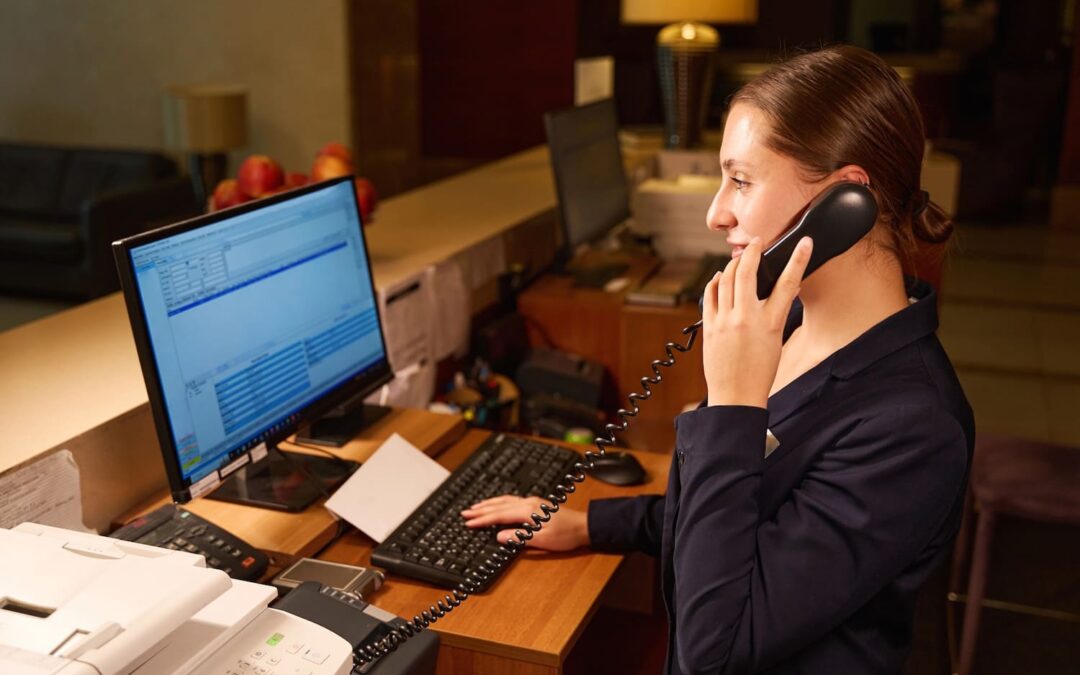
Picture your front desk during peak check-in. A queue of guests forms. Your receptionist is toggling between screens, one for the Property Management System (PMS), one for the phone system, one for guest notes, another for email. They’re asking guests to repeat information that should already be in the system. They’re frustrated. The guests are frustrated. One guest complains about the wait. Your receptionist feels blamed for a system problem they didn’t create.
Your housekeeping team are scattered across multiple floors with radios that have dead zones. A guest requests extra towels. The message gets relayed through three staff members before reaching housekeeping. By the time someone responds, the guest is annoyed. Or worse, the message never reaches anyone because the radio signal cut out. Guests complain. Management blames housekeeping. Your housekeeper feels like they failed, when really they never got the message.
Digital Enhanced Cordless Telecommunications (DECT) handsets or wireless systems with proper coverage solve this immediately. When housekeeping receives a direct message with the guest’s name, room number, and specific request, they can respond quickly. They feel competent. They feel like they made a guest happy.
Your maintenance team deals with constant frustration trying to coordinate who’s handling which emergency. Maintenance requests come via phone call, email, or word-of-mouth. Nobody knows who’s currently working on what. Two people show up to fix the same problem. Or nobody shows up because the request didn’t reach the right person. When something breaks, the tension between departments increases.
When maintenance requests automatically route to available staff via their wireless device with all context information included, response times improve. Coordination becomes seamless. Staff members actually feel like they’re part of a functioning team instead of constantly improvising around system failures.
How Better Communication Technology Improves Retention
Modern communication tools solve these frustrations directly.
Reliable connectivity means staff feel supported. When housekeeping can reach management instantly, they don’t feel abandoned on their floor. When maintenance receives emergency notifications reliably, they can respond quickly and look competent. When front desk has instant access to guest information, they can focus on hospitality instead of data entry.
Reduced manual data entry saves mental bandwidth. Your front desk staff spends multiple minutes per shift just re-entering information that’s already in your system somewhere. That’s not productive work. When your phone system integrates with your Property Management System (PMS) through middleware like TigerTMS’s iLink Service Bus, guest information appears automatically.
Mobile connectivity enables better work-life fit. Staff who can communicate effectively across the property feel less stressed. They’re not frantically hunting down colleagues. They’re not missing critical information. They’re not working in isolation. When housekeeping can coordinate via wireless handsets, they feel connected to the team even when they’re physically spread across the building.
AI Tools and Training Efficiency
New staff retention also depends on how quickly people ramp up to competence. When onboarding takes weeks and new hires feel incompetent, they quit. When training is systematic and supported by technology, people stay.
Modern contact centre platforms with Artificial Intelligence (AI) capabilities can help here. New front desk staff can use AI-powered response suggestions to handle guest requests more confidently. Suggested responses help them learn language patterns and reduce anxiety about whether they’re handling situations correctly. Experienced staff look like they’re just being faster; new staff feels like they’re being supported.
AI can even be part of the training process by simulating a guest call. Your new recruits can practise what they’ve learned with a very realistic sounding ‘guest’ and be better practised to handle the real thing.
Calculating ROI on Staff Retention Technology
You implement communication technology for better staff satisfaction and well-being. Consequently, financial gains are also realised!
Here’s the basic principle:
Your current turnover creates ongoing replacement costs, recruitment, onboarding, lost productivity, training. Using effective technology addresses the root causes: communication gaps, inconsistent training, and lack of support.
When you reduce turnover through better systems, you immediately lower those replacement costs.
Beyond the immediate returns, there are secondary benefits: experienced staff work more efficiently, require less supervision, and deliver better guest experiences. As your team stabilises and gains experience, these productivity gains compound. The financial benefit extends well beyond the first year.
Properties that implement effective communication solutions thoughtfully see meaningful improvements in staff stability. The combination of better communication tools, integrated systems, and training support addresses the specific frustrations that drive people to leave.
What Actually Matters for Staff Retention Through Technology
It’s not about having the fanciest system. It’s about having functional tools that do the job they’re supposed to do.
Your staff don’t care that your phone system is state-of-the-art if the wireless coverage doesn’t reach the laundry room where they spend half their day. They don’t benefit from AI-powered chatbots if the front desk still has to manually re-enter guest information. They won’t appreciate integration benefits if adoption is weak because nobody trained them properly on how to use it.
Implementation matters more than the technology itself. Your staff needs:
- Training that actually sticks. Not a 30-minute demonstration. Real, repeated training with support.
- Clear understanding of the “why.” When staff understand how the system makes their job easier, they use it. When they don’t understand the purpose, they revert to old workarounds.
- Leadership that models adoption. If management doesn’t actively use the new tools, staff won’t either.
- Support when things break. When something malfunctions, your team needs to know someone will fix it quickly.
The Retention Conversation Starts with Staff
Before you choose any communication technology, talk to your team about their pain points. What’s actually frustrating them about current systems? What would make their day easier?
These real problems should drive your technology choices, not vendor marketing material or “industry best practices” that don’t fit your property.
When your staff feel heard and see technology being implemented to solve their actual problems, adoption is easier and retention improves naturally. They see the new tools as management investing in making their job better, not as surveillance or overload.
Investing in staff retention through better communication technology is investing in your competitive advantage.
Ready to learn more about communication systems that will help your team more effectively? Reach out to our team of specialists today.