

You run a beautiful hotel in regional Australia. Your location is your competitive advantage, guests come for the scenery, the quietness, the escape from city crowds. But your hotel also runs on technology that’s optimised for Sydney, Melbourne, and Brisbane. When something breaks, the nearest specialist is three hours away. Your internet reliability is inconsistent. Your vendor support assumes you have the infrastructure that metro properties take for granted.
You’re not managing a hotel problem. You’re managing a location problem.
A major hotel in the CBD has gigabit internet, multiple internet service providers (ISPs) to choose from, local technicians who can arrive same-day, and vendor support that understands metro infrastructure. A regional property has often just one ISP option, inconsistent upload speeds that make cloud systems struggle, technicians who service a territory spanning hundreds of kilometres, and vendors who give you the same solutions they sell to metro hotels without accounting for your reality.
The technology that works in Melbourne doesn’t automatically work in Tamworth. You need a different approach.
Understanding Infrastructure Realities in Regional Australia
The first step is acknowledging that infrastructure challenges in regional Australia are genuine.
Internet reliability is different. Metro properties usually have redundancy, if one Internet Service Provider (ISP) fails, another is available. Regional properties often have one ISP option, sometimes two if you’re lucky. If that connection drops, you have limited alternatives. Upload speeds are often slower than metro equivalents, which matters when your Property Management System (PMS), cloud backup, and guest Wi-Fi all compete for bandwidth.
More importantly, regional internet often has higher latency (the delay between sending data and receiving it back). This doesn’t matter for email, but it affects real-time systems. Your phone system running on cloud infrastructure might experience lag during peak times. Video conferencing becomes choppy.
Vendor support takes longer. When your phone system fails in Sydney, a technician can arrive within hours. In regional Australia, “same day” often means “by end of business,” and “next day” is realistic for most issues. You need systems designed for remote troubleshooting, not immediate on-site intervention.
Technology talent is scarcer. Metro areas have universities, tech companies, and IT training institutes. Regional areas usually don’t. Your IT support staff are often generalists managing multiple properties or responsibilities. They’re not specialists who’ve spent years working with hotel PBX (Private Branch Exchange) systems. They’re doing their best with limited resources.
How Technology Needs Actually Differ
Your technology requirements aren’t fundamentally different from a metro property. You still need phones, internet, and guest connectivity. But your constraints are different, which means your implementation strategy should be different.
Cloud versus on-premises. A metro hotel can confidently move their phone system to the cloud because internet reliability is high and support is local. A regional property with inconsistent internet probably shouldn’t. Cloud systems go silent when internet drops. On-premises systems keep working. For regional properties, hybrid approaches often make more sense, critical systems on-site, less critical systems in the cloud.
Redundancy and backup strategies. A metro property might accept that a 15-minute outage is acceptable because the probability is low. A regional property needs redundancy because outages happen more frequently or support or resolution is slower. This might mean backup internet (expensive in regional areas), backup power systems for equipment, and systems designed to keep basic operations running if your primary connection fails.
Vendor selection matters more. You can’t afford to choose a vendor without asking: “How do you support regional properties? How quickly can you troubleshoot remotely? Do you have Australian-based support?” Metro hoteliers can recover from poor vendor support through local alternatives. Regional hoteliers might be stuck.
Wireless coverage is different. A metro property with dense urban coverage can rely on mobile networks for backup connectivity. A regional property might have patchy or non-existent mobile coverage, making mobile hotspots unreliable as a backup. This affects your redundancy planning and your staff communication strategy.
Internet Reliability: Making It Work in Regional Australia
Poor internet isn’t a tech problem; it’s a business problem. Your PMS (Property Management System) needs connectivity. Your booking engine needs connectivity. Guest Wi-Fi needs connectivity. If your internet is down for 4 hours, you’re losing revenue.
Here’s how regional properties actually manage this:
Know your actual bandwidth needs. Most regional hoteliers oversell their internet capability because they don’t actually measure what they’re using. Get a baseline: How much bandwidth does your PMS consume? How much do your guests use? How much does video conferencing take? Once you know the real requirement, you can make smarter choices about redundancy and backup systems.
Investigate every ISP option, including satellite. Don’t assume you only have one ISP option. Check Nbnco.com.au for National Broadband Network (NBN) availability and timing in your area. Look into Fixed Wireless Access (FWA) as an alternative. In some regional areas, satellite internet (though higher latency) can work as a backup if primary internet fails. It’s expensive as a primary connection but valuable as redundancy.
Use local area network (LAN) separation. Some critical systems (your PMS, your phone system) can run on a separate, isolated local network instead of depending on internet connectivity. Your front desk terminals connect to your on-premises PMS server locally, not through the cloud. This reduces internet dependency for business-critical functions and improves resilience when your internet drops.
Implement caching and offline capabilities. Systems designed with offline capabilities can cache data locally. However, most modern phone systems and PMS solutions require internet connectivity, they need specifically architected failover or offline features to continue operating during outages. When these features are in place, local operations continue and data syncs once internet is restored.
Partner with regional ISPs who understand your needs. National ISPs offer standard packages. Regional ISPs understand properties like yours and can often engineer custom solutions for redundancy, prioritisation, and support.
Practical Solutions for Infrastructure Challenges
Here’s what actually works for regional hotels facing infrastructure constraints.
TigerTMS middleware (iLink Service Bus) works particularly well for regional properties. Because integration happens through middleware rather than direct cloud connections, it’s less dependent on perfect internet. Your systems stay local and sync when connectivity is available. Critical operations don’t freeze if your internet is having issues.
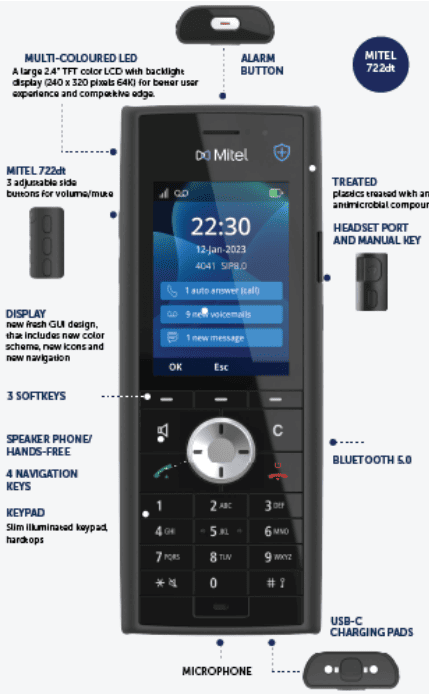
DECT (Digital Enhanced Cordless Telecommunications) handsets for staff communication. Unlike Wi-Fi, DECT operates on dedicated frequencies and doesn’t compete with your internet bandwidth. Your housekeeping and maintenance teams can coordinate reliably without adding load to your internet connection. This is genuinely better for regional properties than forcing everything onto Wi-Fi.
Hybrid phone systems. Keep your on-premises Private Branch Exchange (PBX) but add cloud capabilities for when they make sense. Your phone system keeps working locally if your internet drops. When internet is available, cloud features enhance your capabilities. You get resilience plus modern features without betting everything on cloud connectivity.
Scheduled backups with offline capability. Instead of real-time cloud backup (which demands consistent internet), implement scheduled backups that happen during off-peak hours when internet is more available. Keep critical backups locally so you don’t lose business data if cloud backup fails.
Staffing and Support Considerations
Your IT support structure probably looks different from a metro hotel’s. You likely have one generalist managing multiple properties or responsibilities. That person can’t be a specialist in every system.
Choose technology that doesn’t require constant specialist intervention. Systems should be:
- Self-diagnosing. When something fails, the system tells you what the problem is, not just that it’s broken.
- Remote-supportable. Your vendor should be able to troubleshoot 90% of issues without sending a technician to your property.
- Documented clearly. Training materials and documentation should be available locally, not just through cloud portals that might be slow or unavailable.
- Supported by Australian-based vendors or their Australian partners. You need support that understands regional Australia, not offshore support trying to troubleshoot a problem they don’t have context for.
The Competitive Advantage of Regional-Aware Technology
Most hotel technology is designed for metro properties and adapted for regional ones. It works, but it’s not optimised. Properties that implement technology designed for regional constraints rather than adapted for them operate more reliably.
Your guests don’t care that you’re regional. They expect the same technology reliability they get at city hotels. When you invest in regional-appropriate technology, you deliver that experience without fighting your infrastructure. That’s competitive advantage.
Ready to learn more about hotel solutions? Reach out to our team of specialists today.